The journey of learning is cumulative, and it begins with the basics. Foundational learning begins in early childhood and continues through the primary grades, laying the groundwork for lifelong success. These early years (roughly ages 6–11, Grades 1–5) are a critical window when children’s brains are rapidly developing the cognitive and social-emotional skills that underpin all future learning. If a child does not grasp fundamental literacy and numeracy in these years, the rest of their education becomes a steep uphill climb. By around age 10, students should be transitioning from “learning to read” to “reading to learn”, using their reading skills to absorb new knowledge. This milestone is crucial: children who reach it are set up for a lifetime of learning and opportunity, whereas those who miss it often continue to fall behind.
Research shows that early proficiency in reading and math correlates strongly with later academic achievement, higher rates of secondary school completion, and even economic prospects in adulthood. Conversely, weak foundational skills in the early grades are linked to higher chances of repeating grades or dropping out, and difficulty mastering more advanced subjects. In other words, when the foundation is shaky, the whole structure of a child’s education is at risk. That is why educators often say “teach a child to read by third grade, or watch them struggle thereafter.” The earliest grades are not just another phase of schooling, they are the make-or-break years that can determine a child’s trajectory.
A Global Education Priority: Literacy and Numeracy in Early Grades
Today, there is growing recognition that ensuring strong literacy and numeracy in the first years of schooling is one of the most urgent priorities in education worldwide. The global community has been sounding the alarm over a learning crisis in primary education. Even before the COVID-19 pandemic, far too many children were in school for years without mastering basic skills. Now, the crisis has intensified. According to World Bank and UNICEF data, roughly 6 in 10 ten-year-olds worldwide are failing to attain minimum proficiency in reading by their tenth birthday. In other words, well over half of children are unable to read and understand a simple story at age 10, a shocking indicator often referred to as “learning poverty.” In the poorest regions, the situation is even more dire: for example, in sub-Saharan Africa nearly 9 out of 10 children reach the end of primary school without basic literacy.
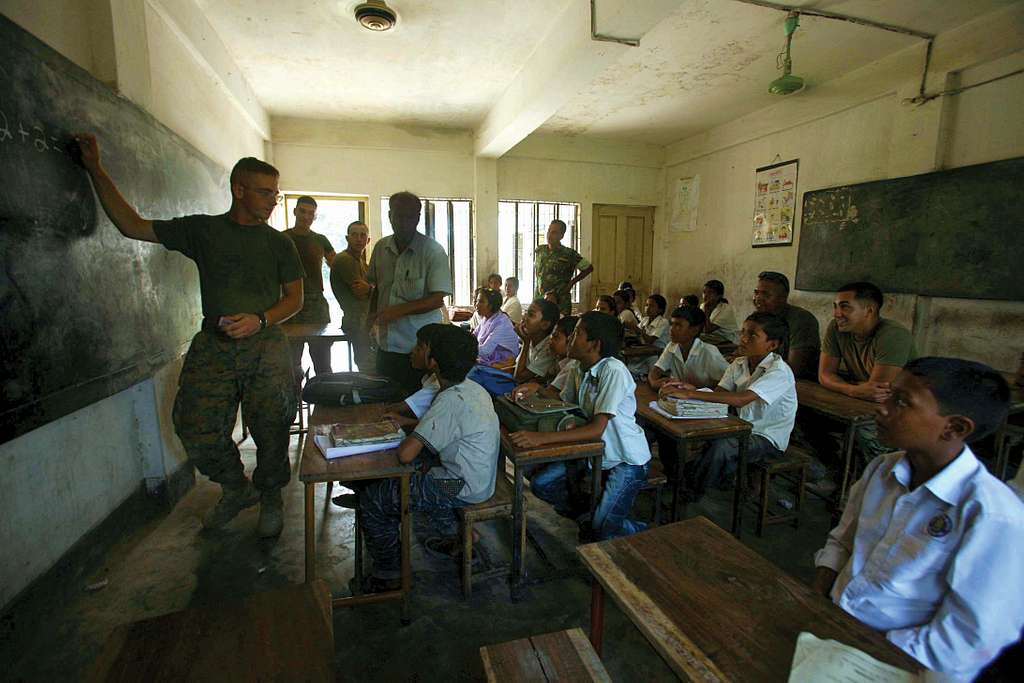
Pfc. Robert Wilkes, a combat engineer, assists in teaching students arithmetic during BIP ’11 in Chittagong, Bangladesh. Source: Defense Visual Information Distribution Service. https://picryl.com/
This crisis has elevated foundational learning to the top of the global education agenda. World leaders and organizations like UNESCO, UNICEF, and the World Bank have zeroed in on Grades 1–5 as the make-or-break stage to improve learning outcomes. In 2022, at the United Nations Transforming Education Summit, a coalition of international partners launched a Commitment to Action on Foundational Learning, essentially a pledge to ensure every child gains basic reading, writing, and math skills in the early grades. By 2024, this initiative had become central to the Education 2030 Agenda (the global framework for achieving Sustainable Development Goal 4 on quality education). Over 30 countries and numerous agencies have endorsed the commitment, signaling a consensus that we must prioritize early primary mastery above all. Strong foundational skills are now viewed as non-negotiable prerequisites for all later learning, and thus as key to achieving broader educational and economic goals.
The Learning Crisis by the Numbers
UNICEF’s “Learning Crisis Classroom” installation at UN Headquarters (Sept 2022) used empty, transparent desks to represent the 64% of children who lack basic reading skills by age 10.
The statistics underscore why early-grade mastery is a matter of urgency. Globally, only about one-third of children can read and comprehend a simple text by the end of primary school, meaning roughly two-thirds cannot. Before the pandemic, this figure (sometimes called the global learning poverty rate) was already around 52%, but it has since surged to an estimated 64% as of 2022. That translates to hundreds of millions of children lacking basic reading skills. To put it plainly: millions of students are reaching Grade 5 (around age 10) without being able to read a basic paragraph or solve simple math problems.
This learning shortfall isn’t confined to low-income countries, but poverty and inequality exacerbate it. Children in low-income nations are around seven times less likely to reach minimum reading proficiency by age 10 than children of the same age in high-income countries, reflecting a stark divide in educational opportunity. If current trends continue, an entire generation could lose out on their potential – UNICEF’s Executive Director has warned that failing to educate children in these foundational skills now will mean “less opportunity tomorrow” and a deepening cycle of intergenerational poverty. The World Bank estimates that the learning crisis could cost today’s students trillions of dollars in lost future earnings, since children who don’t learn to read and count will struggle to contribute to the modern workforce.
Widening the Early Learning Gap
The COVID-19 pandemic dramatically compounded this foundational learning crisis. For young children especially, school closures and disrupted learning in 2020–2021 had an outsized impact. Unlike older students, early graders often cannot effectively learn on their own or via remote lessons without intensive support. The result: many lost months or even years of critical instruction in reading and math. New estimates suggest that learning poverty (the share of 10-year-olds who cannot read) jumped by about one-third in low- and middle-income countries due to the pandemic, from roughly 57% before COVID to as high as 70% in recent analyses. In Latin America and South Asia, where schools stayed closed the longest, nearly four-fifths of children at end-of-primary age now lack basic literacy skills. Even in regions less affected by long closures, the setbacks were significant, and they hit the most vulnerable children hardest.
These losses in Grades 1–5 are especially damaging because if foundational skills are not acquired early, they are much harder to remediate later. Simply reopening schools wasn’t enough to heal the gaps; many children returned to classrooms further behind than ever. Educators now speak of a potential “generational catastrophe” if we do not help young learners catch up. The pandemic, in effect, shone a spotlight on the weakness in our educational foundations. It has compelled education systems worldwide to refocus on the basics: getting every child reading and doing math at grade level as the first order of business.
Starting Recovery at the Foundation
In the wake of the pandemic, education recovery plans around the globe are zeroing in on the early grades. The logic is simple: to mend the cracks in the education system, start where the cracks first appear. If learning gaps begin in Grades 1–3, then that is where remedial efforts must concentrate. Governments and international organizations are now rolling out initiatives to improve teaching and learning in primary classrooms. This includes deploying reading coaches, extending instruction time for literacy and numeracy, and providing targeted remedial programs for children who fell behind. There is evidence that even relatively low-cost interventions can make a big difference. According to UNICEF, it is estimated to take just $10 to $15 per child to deliver remedial education and strengthen education systems’ ability to deliver on foundational skills.
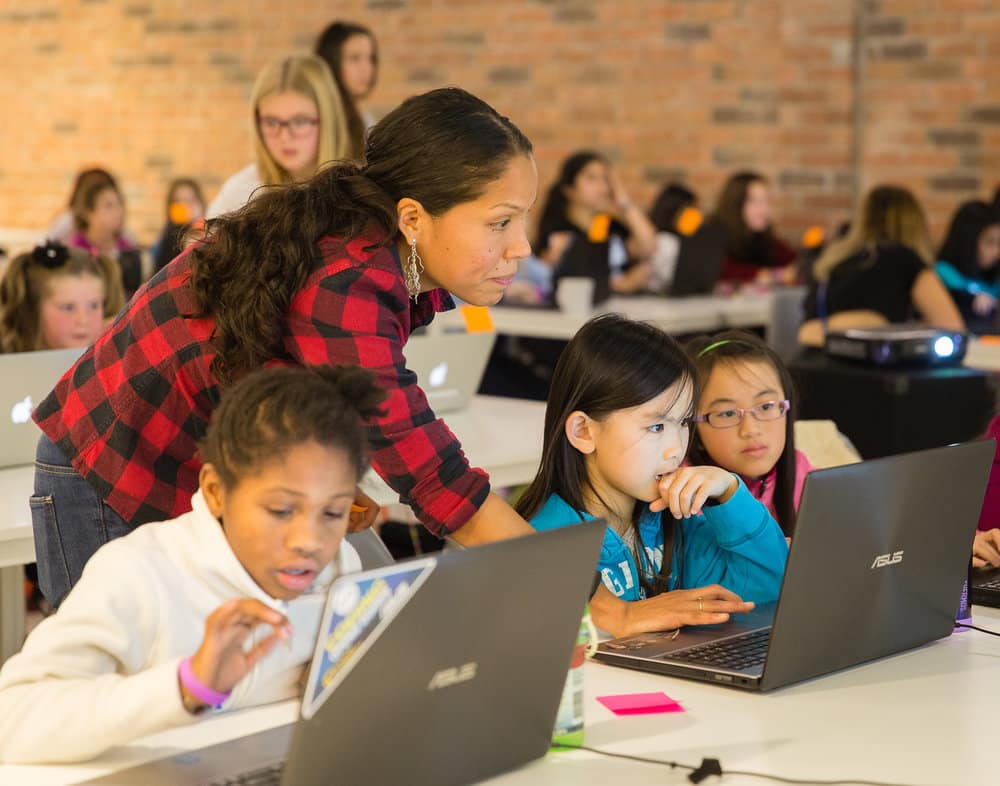
Crucially, recovery efforts emphasize teaching at the right level, meeting each child where they are and helping them progress. This often means assessing students’ reading and math levels early and often, and adjusting instruction rather than blindly following the curriculum if children are not keeping up. It also means equipping teachers with training and tools to teach foundational reading and math effectively, including strategies to engage kids who have missed learning. There is a renewed push to simplify and prioritize curricula in these grades, focusing on depth over breadth, ensuring the essentials are truly mastered. As the World Bank and its partners have urged, education systems must “prioritize teaching the fundamentals” and make sure every child is reached, especially those most at risk of being left behind. In practice, this can mean small-group instruction for reading, active involvement of parents in early literacy at home, and community tutoring initiatives to support the lowest-performing students.
The international community is coordinating on this issue like never before. UNESCO’s Global Coalition for Foundational Learning, formed in 2022, is aligning efforts across agencies to support country-led action on early-grade learning. By 2024, UNESCO reported that this coalition’s agenda, getting all children reading and doing math by the end of primary, is now front and center in global education strategy. It’s a rare point of agreement in a divided world: virtually everyone now understands that without a solid base of literacy and numeracy, none of our other lofty education goals will be reachable.
Supporting Foundational Learning Recovery and Equity
Achieving these foundational learning goals will require not just policy promises, but practical support for schools, teachers, and families. This is where organizations like AHS are making a contribution. AHS directly provides a complete, standards-aligned Grades 1–5 curriculum with interactive video lessons, auto-graded practice activities, and progress dashboards for teachers and parents. By offering these tools free of charge to schools, nonprofits, and parents, AHS helps lower the barriers to quality early education. Such resources can be a game-changer for under-resourced schools or communities recovering from pandemic disruptions, giving educators ready-made materials to reinforce literacy and numeracy, and allowing parents to support learning at home through engaging content.
The mission of AHS is to support foundational learning recovery and promote equity. Every child, regardless of background, deserves the chance to master the basics. By partnering with schools and NGOs, and leveraging technology for interactive learning, AHS aims to help bridge the gaps that have opened up in the early grades. When first graders get excited by a fun video lesson in phonics, or fourth graders receive instant feedback on a math quiz, they are building confidence along with skills. Tools like AHS’s curriculum platform can complement teachers’ work, freeing them to focus more on individual student needs, and give both teachers and parents real-time insight into a child’s progress.
The Time to Act is Now. The future of education, and in many ways, the future of our communities and economies, hinges on what happens in the first few years of elementary school. If we can ensure that every 10-year-old can read, write, and carry out basic math, we unlock the potential of an entire generation. The post-pandemic era has taught us many lessons, and one of the clearest is this: we can no longer take foundational learning for granted. It must be actively cultivated and protected. Fortunately, by combining renewed global commitment with grassroots innovations like the AHS curriculum, there is hope that we can turn the tide on the learning crisis. The youngest learners of today are the leaders, thinkers, and problem-solvers of tomorrow – and it all starts with giving them the strong start they deserve.
Learn more about what AHS can offer and start for FREE today: AHSEdu.org/about-ahs