Around the world, millions of children learn differently, and not because something is “wrong” with them. Neurodivergence is common, natural, and incredibly varied. Yet many systems aren’t built to support the needs of students with ADHD, dyslexia, autism spectrum disorders, processing disorders, language delays, or other learning differences.
UNICEF estimates that 240 million children globally have disabilities, including learning and developmental challenges, making this one of the most overlooked groups in education. In the United States alone, the CDC reports that 11.4% of children aged 3–17 have been diagnosed with ADHD, and ASD identification has risen to 1 in 31 eight-year-olds. Learning disabilities more broadly affect between 5% and 15% of school-aged children worldwide.
With classroom sizes growing and teacher shortages rising, many schools struggle to provide consistent individual attention. As a result, diverse learners often rely heavily on home support, yet parents frequently lack structured tools that match their child’s needs.
This is where digital learning can bridge the gap.
The Barriers Special Learners Face at Home
Parents of neurodivergent children often describe a similar set of challenges. Homework time becomes stressful. Skills aren’t sticking. Children become anxious, distracted, or overwhelmed. Sometimes the issue is not the content itself, but how it is delivered.
Many children with ADHD or processing disorders struggle to follow long lessons without breaks. Children with dyslexia may need repeated practice in small, predictable steps. Others with autism may require visual supports and a stable routine. When instruction at school is inconsistent or when resources are limited, families feel the pressure to fill the gap, even if they don’t know where to begin.
Home routines can also be unpredictable. Parents may work long hours. Siblings may need attention. Internet access may be unreliable. And without clear guidance, even well-intentioned parents can feel lost.
These challenges are not a sign of failure, they are signs that families need better tools.

How Digital Tools Improve Learning Outcomes for Neurodivergent Students
Digital learning tools, when thoughtfully designed, offer advantages that directly support the way diverse learners process information. Research from the OECD shows that technology can help children with special needs improve communication, attention, memory, and skill retention. These tools can break information into manageable parts, provide visual support, and allow students to repeat content without pressure.
Beyond that, digital platforms can reduce anxiety by offering predictable, step-by-step lessons. Children can pause or replay videos. They can learn at their own pace, without the fear of “falling behind.” Many parents note that having structured, consistent materials at home transforms stressful learning sessions into calm, achievable routines.
For children sensitive to sensory overload or easily distracted, offline features are especially powerful. Without the noise of notifications or internet interruptions, learners can focus on one task at a time, an essential component of building confidence.
Even more importantly, digital tools provide parents with visibility. When parents can track progress, view skill gaps, and see improvement over time, it becomes easier to support their child with encouragement instead of worry. That shift in itself can dramatically reduce learning stress for the entire family.
Building Confidence Through Structure: Practical Tips for Parents
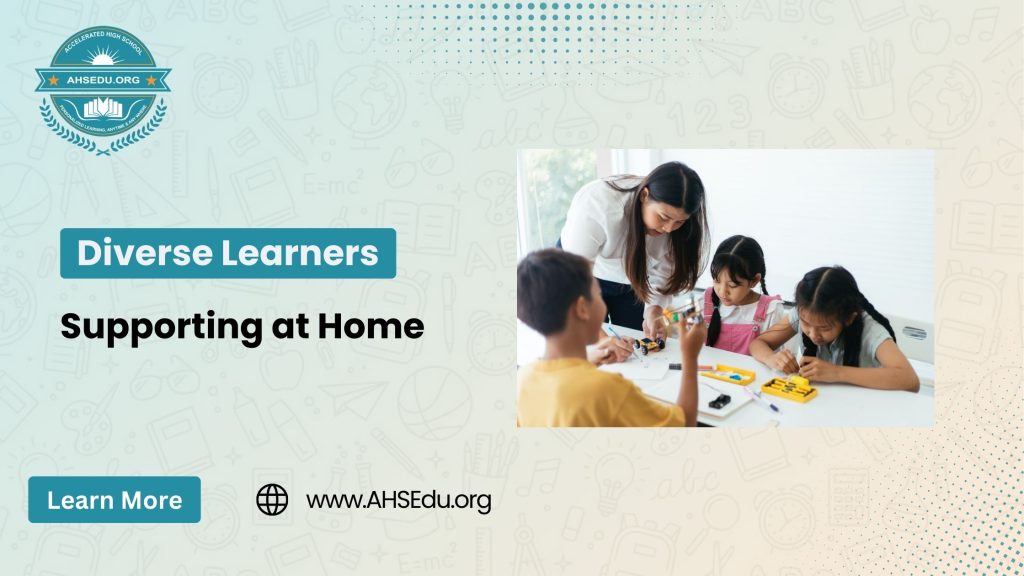
Consistency is one of the most effective strategies for diverse learners. Even small routines can reshape a child’s confidence and reduce learning anxiety. Parents often find success with short daily sessions, predictable schedules, and mixing screen-based learning with hands-on practice.
Creating a comfortable environment also helps. Some children focus better with headphones, others with soft background music, and others in complete silence. Many parents build a designated “learning corner” that cues the brain for focus.
Using the right tools matters just as much. A child who struggles with reading may thrive with video lessons. A student who feels overwhelmed by long pages may prefer short quizzes with immediate feedback. Some prefer worksheets they can touch, highlight, and mark up.
The key is not forcing a child into a system, but giving them tools that adapt to how they learn best.
How AHS Education Supports Diverse Learners at Home
AHS Education was intentionally designed to support foundational learners, including children with diverse learning needs, by giving families flexible and accessible tools. Instead of long, overwhelming lessons, AHS uses short, replayable instructional videos that children can revisit as many times as they need. This is crucial for students with dyslexia, ADHD, or processing-based challenges.
The platform’s auto-graded quizzes offer immediate feedback, making it easier for parents to see what their child understands and what might need more support. For children who thrive on practice, printable worksheets offer hands-on reinforcement without the distractions of a screen.
AHS is also mobile-friendly and offers offline access, which is especially valuable for children who need a quiet, low-stimulation environment or who live in areas with unstable connectivity. Even without internet, learning continues.
The parent dashboard gives caregivers a clear view of their child’s progress, highlighting areas of strength and areas where extra support may be needed. For families who feel overwhelmed by the idea of monitoring learning, this dashboard becomes a simple, stress-relieving tool.
For many parents of neurodivergent learners, AHS is not a replacement for school or therapy, it is an add-on support system that brings structure, repetition, and confidence-building tools directly into the home.
Try AHS Free for 3 Months! Give Your Child the Structure They Deserve
Every child deserves a learning environment that reflects their strengths. If you’re a parent seeking a flexible, supportive way to help your child build confidence and routine at home, AHS Education can help.
Start with 3 months of free access and explore a full Grades 1–5 curriculum, interactive lessons, offline learning, and real-time progress dashboards.
Try it today: AHSEdu.org/demo-for-parents