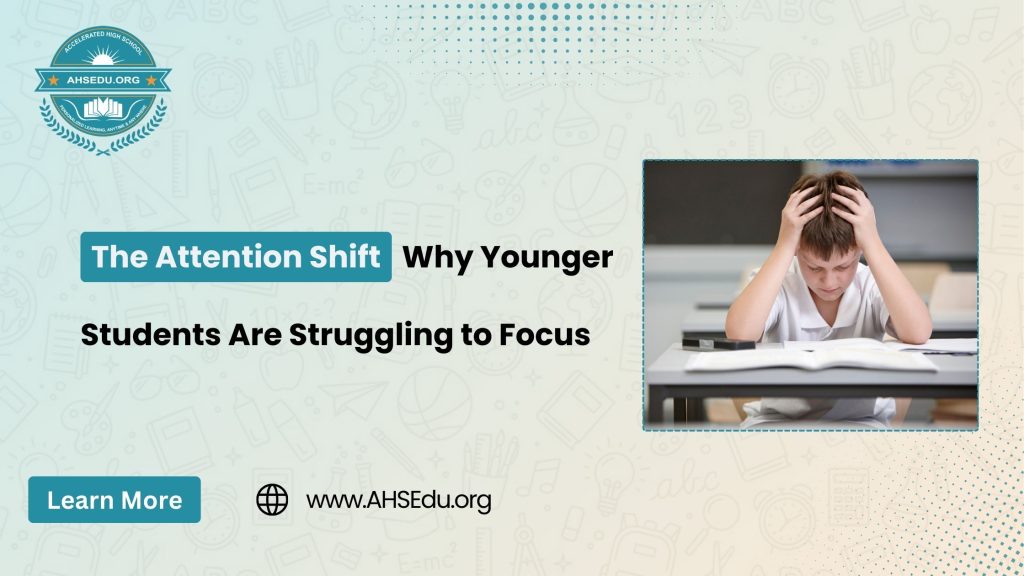
In classrooms and homes around the world, parents and teachers are noticing the same concerning trend: young children are finding it harder to focus than ever before. This isn’t anecdotal. Several global reports across 2024–2025, including studies from the OECD and UNESCO, point to shrinking attention spans in early elementary students and a rise in teacher-reported concentration issues.
As students in Grades 1–5 fall into the age group most affected by overstimulation, disrupted routines, and reduced reading stamina, the consequences are beginning to show in core reading and math skills. Understanding why attention is declining, and how structured digital tools can support focus, has become essential for families and schools.
Why Attention Spans Are Shrinking in Younger Learners
Overstimulation and Post-Pandemic Digital Habits
During and after the pandemic, children between ages 5–10 dramatically increased their daily screen use for both entertainment and school. High-speed content, fast transitions, and endless choice became the norm. Research in developmental psychology shows that overstimulating digital environments can reduce a child’s ability to sustain attention on slow-paced or multi-step tasks.
The OECD’s 2025 Learning Behaviour Brief notes that many students now struggle with tasks requiring more than 10–15 minutes of sustained attention, affecting reading fluency and multi-step math problem solving.
Fragmented Routines at Home and School
Many households, especially those balancing multiple jobs or limited childcare, experience irregular routines. Without consistent times for reading, homework, or quiet focus, young learners have fewer opportunities to build sustained attention skills.
Teachers report similar challenges in classrooms: late arrivals, inconsistent attendance, and interruptions in instructional flow make it harder for students to re-engage.
Decreased Reading Time and Cognitive Endurance
According to UNESCO’s 2024/2025 literacy monitoring, daily reading frequency in early grade students has declined globally. This reduction affects both vocabulary development and the “mental stamina” required for longer academic tasks.
Shorter attention spans and weaker reading endurance reinforce each other, creating a cycle that makes learning even more difficult.
Cognitive Development Realities in Grades 1–5
Neuroscience confirms that the brain regions responsible for sustained attention and executive functioning are still developing in early childhood.
Because Grades 1–5 learners are at a stage where focus skills are just forming, they’re most vulnerable to environmental factors such as overstimulation, inconsistent routines, or lack of scaffolding. Without proper support, the effects can compound and carry into upper grades.
How Parents Can Help: Home Strategies That Make a Difference

Create predictable routines
Children thrive with structure. Having set times for homework, reading, and play helps the brain transition more smoothly into focused tasks.
Use short, chunked learning sessions
Instead of long study hours, experts recommend 10–15 minute “learning sprints” with short breaks. This mirrors how young brains naturally absorb information.
Limit distractions, especially before studying
Simple adjustments such as reducing background noise, clearing clutter, or minimizing toy distractions can significantly improve concentration.
Use repeatable learning activities
Repetition helps solidify concepts and builds confidence, which in turn strengthens motivation and attention.
Incorporate movement breaks
For many kids, particularly those with attention challenges, physical activity resets the brain and helps restore focus.
How Teachers Can Support Attention in the Classroom

Visual scaffolding and step-by-step instruction
Clear visuals, diagrams, and checklists reduce cognitive load and help students stay oriented, especially during multi-step lessons.
Predictable schedules and routines
Children focus longer when they know what’s coming next and when transitions are consistent.
Blended learning models
Combining teacher-led instruction with short digital lessons can help students reset attention, reinforce concepts, and learn at their own pace.
Small, targeted practice tasks
Quick checks, exit tickets, and short independent activities help maintain focus without overwhelming students.
Catch-up opportunities for absent or struggling students
Students who miss instruction often have more difficulty concentrating because they feel behind; structured digital tools can help them re-enter lessons smoothly.
How AHS Helps Children Rebuild Focus and Confidence
AHS Education is built specifically for early-grade learners who benefit from short, structured, and consistent learning experiences. Its design naturally supports attention-building in Grades 1–5 through:
✔ Short, clear video lessons
Each lesson focuses on one concept at a time, ideal for young learners whose attention spans are still developing.
✔ Step-by-step learning paths
Students follow structured sequences that help them stay organized and reduce overwhelm.
✔ Repeatable quizzes and worksheets
Children can repeat practice as needed, reinforcing memory and reducing anxiety about new tasks.
✔ Offline learning for low-distraction environments
When internet is limited, or when families prefer quiet offline practice, children can keep learning without overstimulation.
✔ Real-time dashboards for parents and teachers
Dashboards reveal where a child struggles to stay engaged or focused, helping adults intervene early with targeted support.
Together, these features provide a calm, predictable, structured environment, exactly what many children need to regain focus in 2025.
Building Attention Is the New Essential Skill
Attention is now one of the most important foundational skills in early education. As parents and teachers face rising challenges, from overstimulation to disrupted routines, structured digital tools have emerged as powerful allies.
AHS Education supports children with routines, clarity, manageable lesson sizes, and tools that fit into any home or classroom environment, online or offline.
To help your child or students rebuild strong study habits and confidence, try AHS Education for free:
Parents → https://ahsedu.org/demo-for-parents
Schools → https://ahsedu.org/demo-for-institute
Nonprofits → https://ahsedu.org/demo-for-nonprofit
Tutors → https://ahsedu.org/demo-for-tutor