Why Creativity May Be More Valuable Than Memorisation
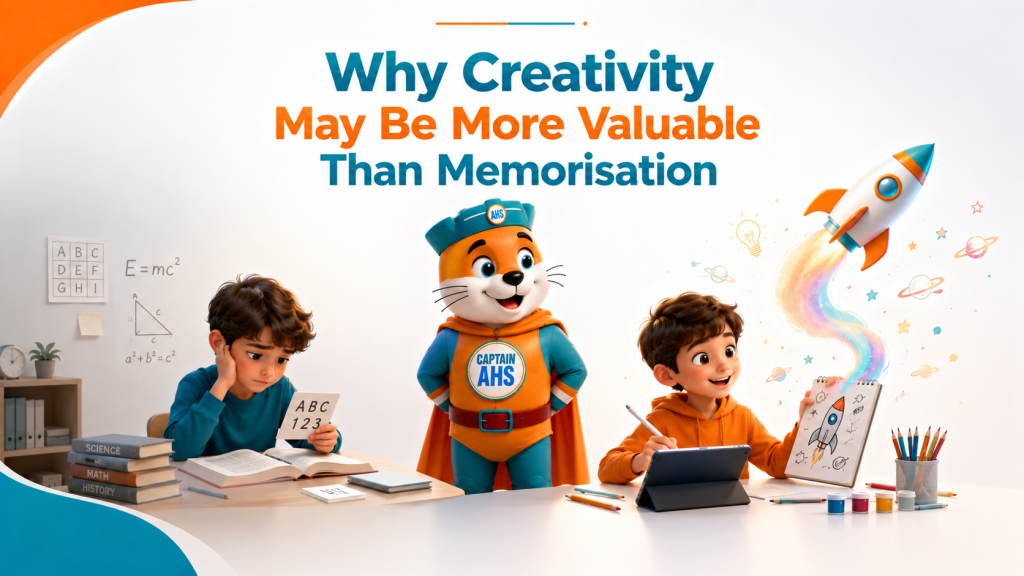
Children need to be able to remember facts, but in a changing world they need more. Memorisation is important in learning, but creativity is necessary for children to apply what they know in new and meaningful ways. Thinking differently, generating ideas, and solving new problems is becoming more and more important as technology and artificial intelligence change the landscape of education and future professions.
Memorization provides students with important knowledge, including vocabulary, formulas, facts, and concepts. Remembering information is not enough; however, a child understands how to use it.
Creativity helps students to start thinking “What if?” and to find other ways to solve a problem. A creative student is not just someone who remembers how something works; he/she might also think about how it can be improved or applied in another way.
Creativity enhances problem-solving ability
The creative ability reinforces problem-solving skills.
A memorized answer is seldom the right one for a real-life problem. Children have to make mistakes, try things, and come up with different ideas if they want to find a solution.
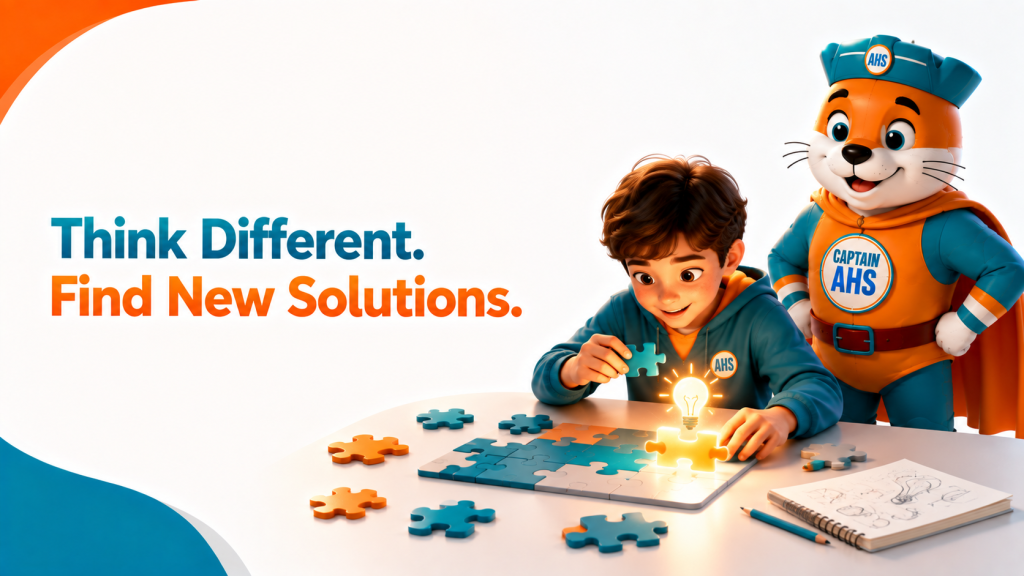
Creative activities such as building projects, storytelling, science activities, puzzles, and art activities encourage children to think creatively, allowing them to find multiple ways to solve a problem, thereby promoting the generalization of thinking beyond one correct answer. These experiences contribute to the development of problem-solving and critical-thinking skills that are relevant both in and outside the classroom.
Creativity Builds Confidence
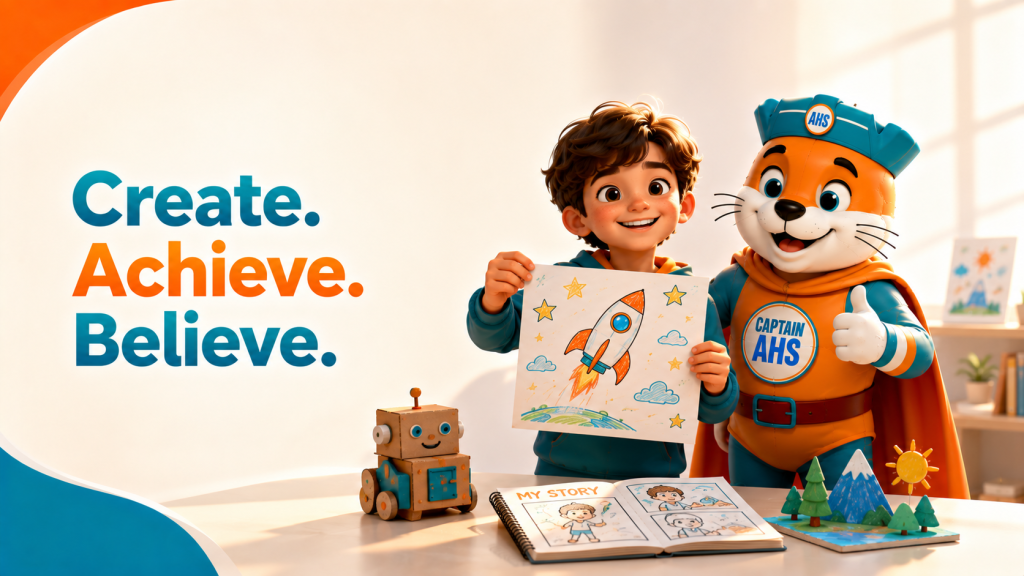
When children are offered opportunities to produce something they’ve thought up, they hear that their ideas are worthwhile. When students get a sense of achievement from completing a drawing, developing a story, designing a project, or finding a unique solution, they have achieved a sense of success.
This confidence can help them to be more active in class and express themselves, while also motivating them to try new things and not fear making mistakes.
Creativity is a predictor of the future
Creative children are ready for the future.
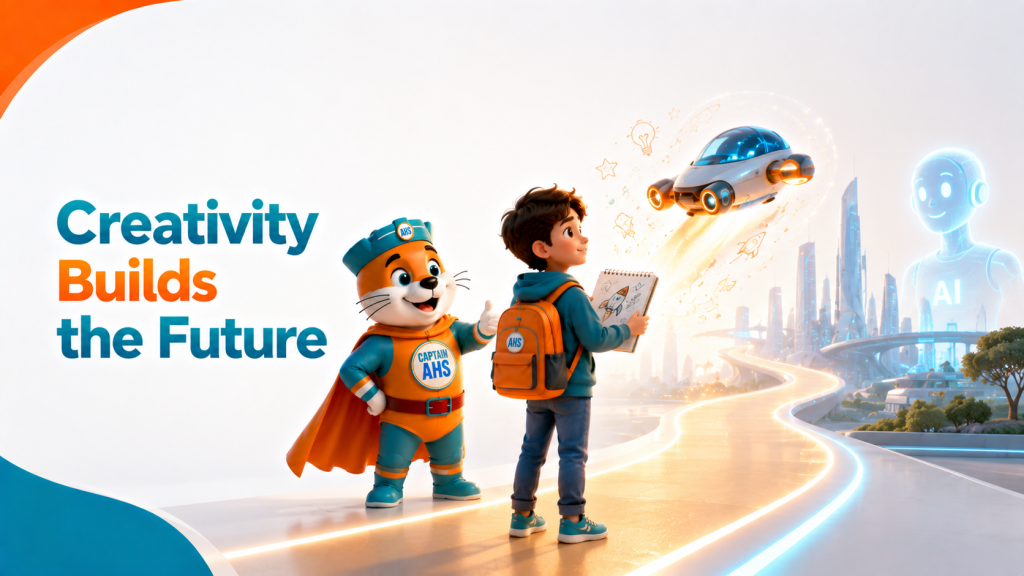
Jobs are changing rapidly. Many tasks with information processing and pattern recognition are already possible with artificial intelligence. Uniquely human capabilities are particularly significant, like imagination, originality, emotional understanding, and creative problem-solving.
The creatively thinking child helps himself to be more flexible and ready to deal with new and unknown situations.
How Parents and Teachers Can Encourage Creativity
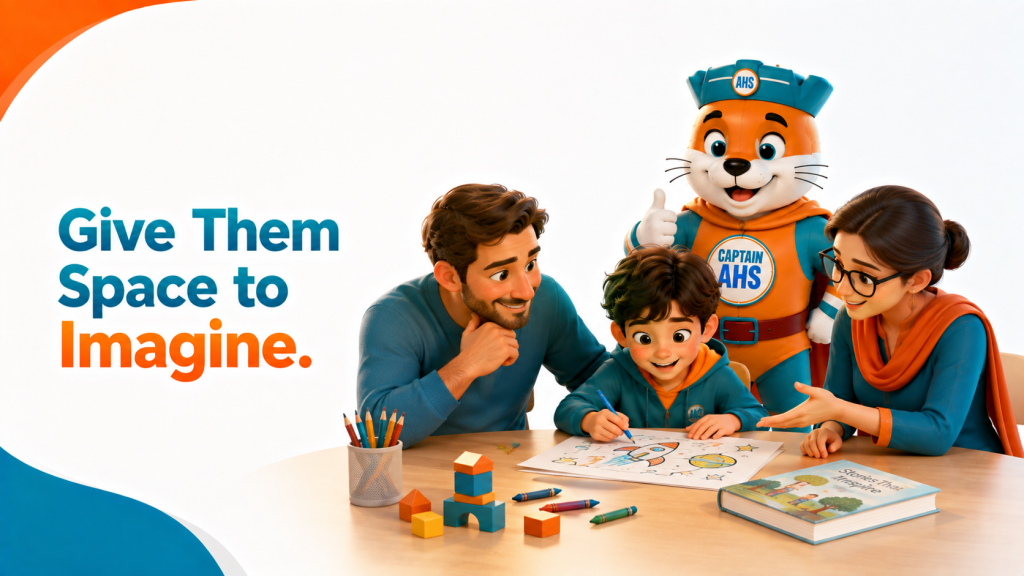
Creativity doesn’t require expensive equipment or complicated activities. Parents and teachers can encourage it through simple experiences such as:
Asking open-ended questions
Encouraging children to tell stories
Giving them creative projects
Allowing different ways to solve a problem
Encouraging curiosity and experimentation
Letting children learn from mistakes
Combining art, science, technology, and play
At AHSEdu.org, we believe that education should go beyond memorizing information. Through interactive learning, creative activities, problem-solving, and engaging lessons, students can develop the confidence and skills they need for the future.
Conclusion
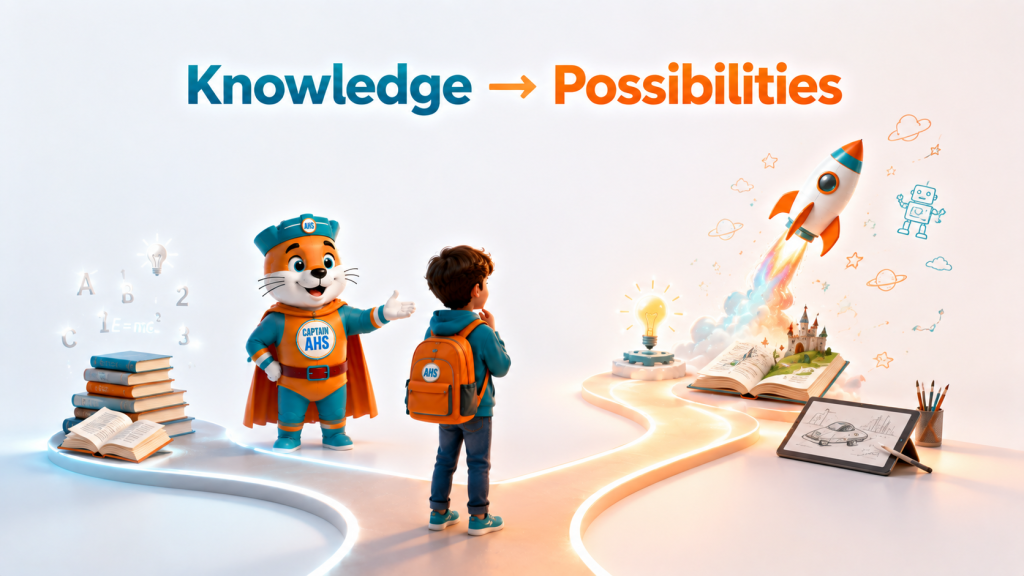
Education is always going to be based on memorization, but creativity is going to get children to “take what they know and make it their ideas, solutions, and possibilities.” The opportunity to explore, experiment, and think for themselves will ensure students not only ‘succeed’ in today’s classroom, but ‘thrive’ in tomorrow’s.
Education is not just about finding the correct solution; it’s also about using your imagination to find new ones.